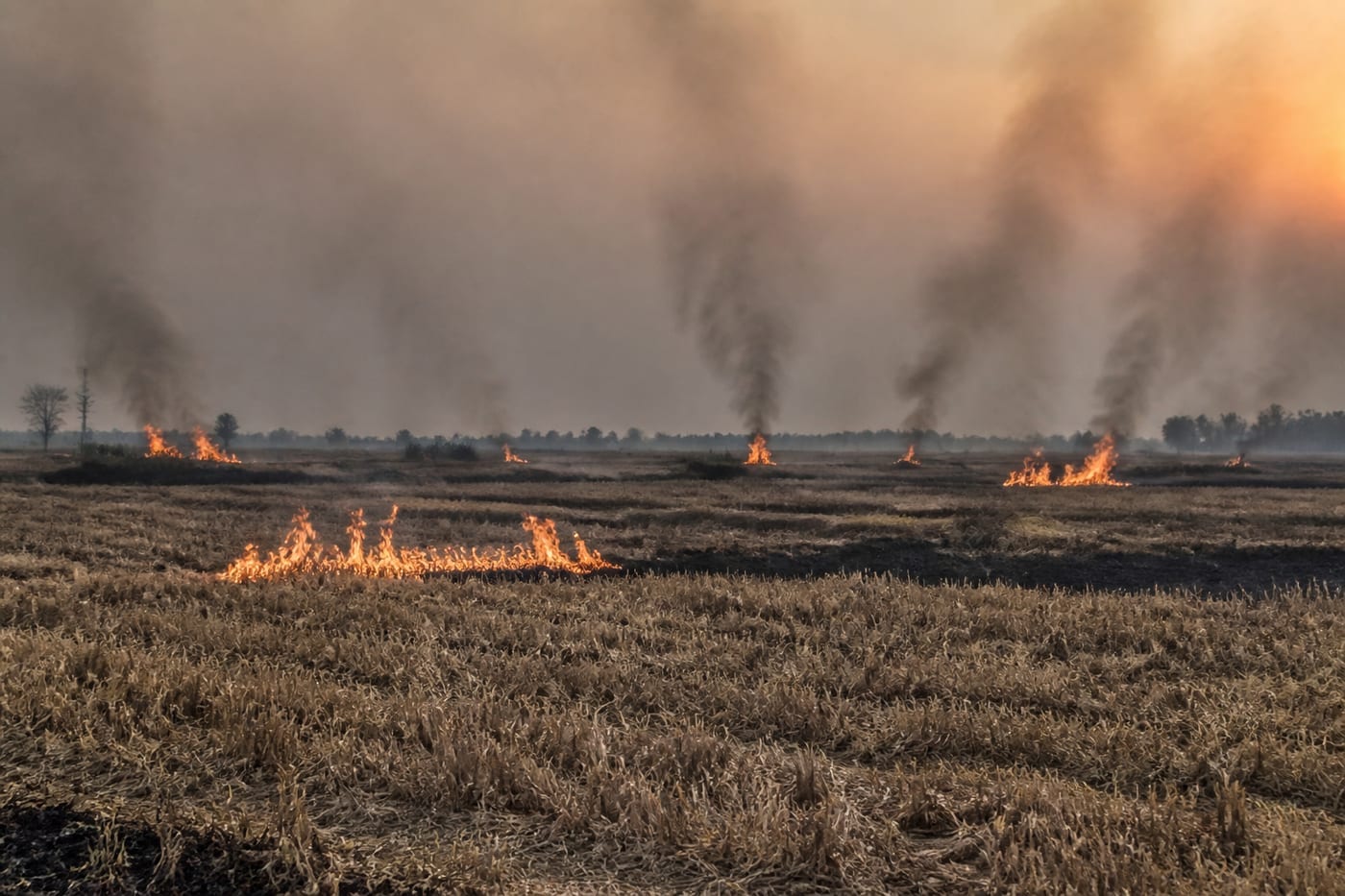
Each August, as wheat and barley harvests finish across eastern Georgia, smoke returns to Kakheti. Farmers set fire to leftover stubble on the Alazani and Shiraki plains — hundreds of piles at a time, and sometimes larger blazes that run through the night. Ash settles on houses, laundry lines and vegetable plots in villages downwind of the fields.
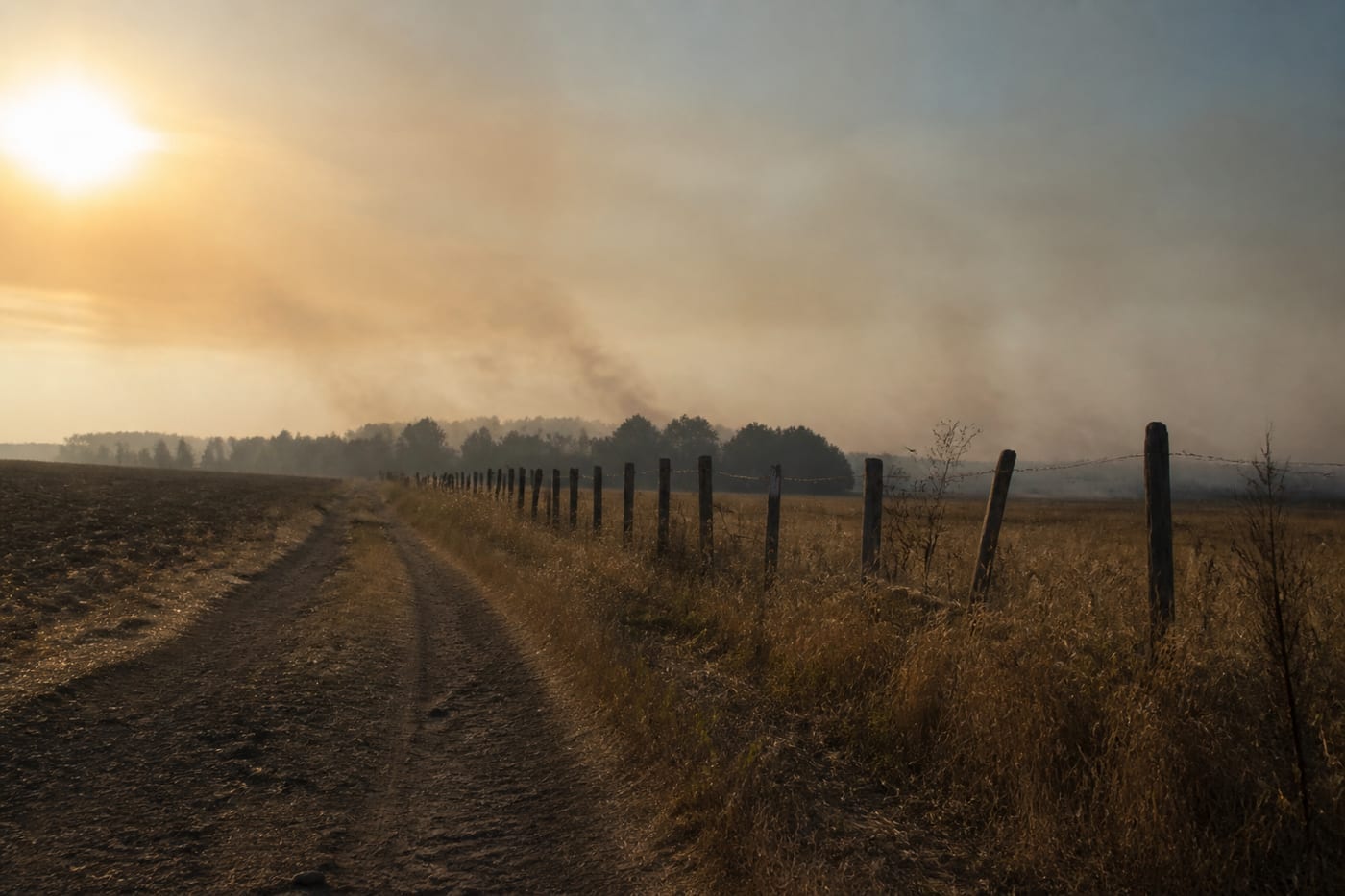
Residents describe skies that glow red after dark and horizons that look charred by day. In communities where water supply is already limited, people say freshly washed clothes must be rewashed, children's paddling pools need cleaning again, and a thin film of soot covers almost everything outdoors.
A long-standing post-harvest practice
Burning cut fields is not new in Kakheti. Many farmers say torching stubble is cheaper and simpler than removing residues mechanically before ploughing. Some argue it clears weeds and pests, including broomrape, and prepares ground quickly for the next season.
Opponents counter that the practice spreads beyond the intended plot. Farmer Avtandil Gochashvili, from Kvemo Magharo in Sighnaghi municipality, has posted video from burnt fields urging neighbours not to ignite stubble. He recalls a recent season when flames crossed into adjacent land, damaging vineyards, standing crops and orchards. Once wind picks up, he says, fires are hard to stop — especially after nightfall.
What villagers see each season
In Dzalisa Anagi, resident Maya Jaliashvili told Radio Tavisupleba that the whole valley looks black from above and that August has become a month villagers dread. Similar complaints circulate in Kakheti Facebook groups every year: photos and clips of burning fields, arguments over who is responsible, and calls for fines.
Some commenters demand that offenders be identified and penalised. Others ask neighbours directly to stop burning. A third thread focuses on cost: one local farmer wrote that he paid extra each year for a combine fitted with a chopper to manage residues, yet still saw burning nearby and gave up the expense.
What environmental specialists say
Amiran Kodiasvili, who leads the Friends of Vashlovani Protected Areas association, told the broadcaster that lack of awareness is a central factor. Most growers know stubble burning damages the humus-rich topsoil, he said, but many still believe short-term gains outweigh the loss. Yields on burnt plots can look strong in a given year even when the underlying soil is being depleted.
Kodiasvili warned that if the cycle continues for decades, fertility could decline in ways that take generations to restore. Because grain is strategically important for Georgia, he suggested targeted support — not necessarily identical subsidies for every crop — to help cereal farmers adopt full post-harvest handling without fire.
He also argued that large fines alone would not fix the problem. Heavy penalties could push some farmers out of production entirely, while a pilot demonstration showing competitive yields without burning might persuade others.
Enforcement and earlier appeals
Rezo Getiashvili of the Caucasus Environmental NGO Network described the annual scenes in Alazani and Shiraki as ecocide. He said an information campaign and visible warnings were among recommendations sent to authorities in past years, but little changed on the ground.
A 2021 appeal to the government, signed by farmers' and business groups among others, cited Article 177 of Georgia's Code of Administrative Offences, which covers burning agricultural residues. Signatories said the provision had effectively become a dead letter: according to their review, patrol police registered no protocols for such cases between 2019 and 2021, and open statistics remain scarce.
The letter linked post-harvest burning to larger wildfires, soil erosion and risks to vineyards, orchards, windbreaks and biodiversity. It called for patrol monitoring during harvest season, warning notices and a public-awareness drive coordinated with the Ministry of Environmental Protection and Agriculture.
Getiashvili told Radio Tavisupleba that most people now know burning stubble is illegal, yet enforcement remains weak. He said authorities should create at least one visible precedent — without bankrupting smallholders — so compliant farmers are protected and others see that the tradition carries consequences.
Radio Tavisupleba said it asked the Ministry of Environmental Protection and Agriculture for its current position on the August fires in Kakheti but had not received a response by publication time.
Why the pattern persists
Observers on all sides describe a circular problem: burning saves labour and cash in the short term, social media outrage spikes each August, and formal action is rarely visible. Farmers who invest in proper residue management say they still breathe their neighbours' smoke. Environmental groups want patrols and education; many growers want affordable machinery or state-backed alternatives before they abandon a method their families used for years.
Until those pieces align, Kakheti's August horizon is likely to keep filling with smoke shortly after the last combine leaves the field.