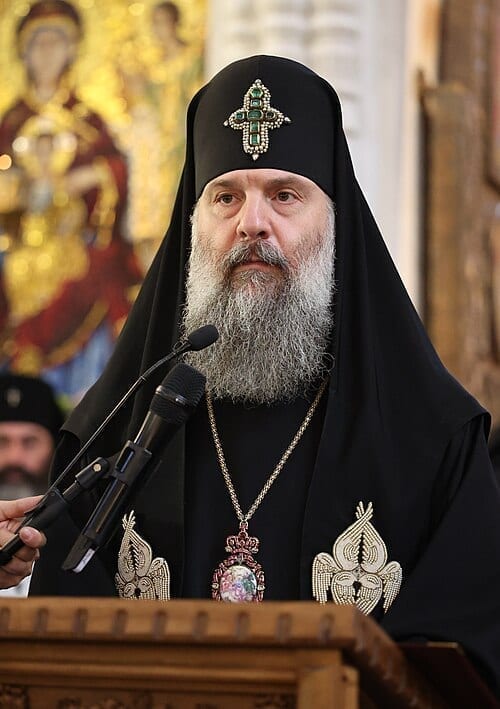
On 12 May 2026, Metropolitan Shio was enthroned as Patriarch Shio III of the Georgian Orthodox Church in a subdued ceremony at Svetitskhoveli Cathedral in Mtskheta. The service marked the first patriarchal enthronement in nearly 50 years, with many in the congregation and watching on television reflecting on both the milestone and what lies ahead. At 57, Shio steps into the enormous shadow left by the late Catholicos-Patriarch Ilia II, who led the Church for more than four decades and was widely treated as a national moral reference point.
From conservatory to monastery
Born Elizbar Mujiri in central Tbilisi in 1969, Shio grew up in an elite family and trained as a cellist at the conservatory. Close school friends included future president Giorgi Margvelashvili and conservative businessman Levan Vasadze. A spiritual crisis at age 22 led him to Shio-Mgvime Monastery, where he remained for five years before emerging as Monk Shio — the name that would follow him through priesthood and the episcopate.
Those who knew him in his musical years describe a disciplined, introspective figure rather than a public politician. His turn toward monastic life was personal, not theatrical, but it placed him inside a Church hierarchy that would later become one of the most powerful institutions in independent Georgia. Relatives and former classmates have rarely spoken on the record, yet the outline of his biography — conservatory training, elite Tbilisi circles, then withdrawal to the monastery — has already become part of how Georgians narrate his rise.
A quiet climb to senior rank
Shio was ordained a priest in 1996 and a bishop in 2003, initially responsible for the Senaki diocese in western Georgia. He later completed doctoral work in Moscow on a Georgian saint and served parishes abroad, building contacts within broader Orthodox networks while keeping a lower public profile than many senior clerics. Parishioners in Senaki remember him as an attentive pastor who preferred local pastoral work to television appearances, a style that contrasted with more outspoken bishops in the capital.
Ilia II named him Locum Tenens in 2017 as the Patriarch’s health declined. For years Shio managed day-to-day Church affairs while Ilia remained the symbolic centre of authority. That long interim period shaped expectations: insiders saw him as the natural successor, while observers watched for signs of how he might differ from his predecessor on politics, doctrine and relations with the state. When Ilia died in early 2026, the transition felt both long prepared and deeply unsettled — no living Georgian under 60 had seen a patriarch change in their adult lifetime.
Moscow links and Western optics
Shio’s Moscow studies and his friendship with Vasadze are often discussed in Georgian media as part of the wider debate over the Church’s international orientation. One senior bishop told local media that Russia supports Shio without treating him as a direct appointee — a distinction that matters in a country where ecclesiastical and geopolitical loyalties are often read together.
So far, Shio has kept Moscow delegations relatively in the background while giving more visible space to Western Orthodox leaders at major services. Whether that balance reflects conviction, strategy or simply the optics of a contested transition remains an open question for theologians and diplomats alike. In Tbilisi’s foreign-policy circles, some read his enthronement guest list as a careful signal: Georgia’s Church remains Orthodox and deeply tied to Slavic theology schools, but the Patriarchate still seeks legitimacy in European capitals where Moscow’s influence is viewed with caution.
Church and state relations
The Georgian Orthodox Church has played a visible role in recent public debates on family policy, demographics and social values — themes that also feature in government messaging. Shio’s public opposition to abortion and his emphasis on women as mothers and wives align with positions the Church has long held and with current state family-policy discourse. Some media reports since 2019 have discussed coordination between Church and political figures around the succession; Church officials deny any improper deal-making and describe the enthronement as a canonical process. Public commentators occasionally note overlap between Church sermons and campaign-season themes on social issues; Church lawyers maintain the Patriarch speaks as a moral teacher, not a partisan actor.
For expats and residents who are not Orthodox believers, the Patriarch’s stance still matters: the Church retains strong influence over education, public holidays, civil discourse and the moral language politicians use when debating migration, gender policy and Europe-versus-Russia positioning. School curricula, public swearing-in ceremonies and even casual workplace conversation in Georgia often assume a shared Orthodox frame of reference that outsiders may not share but cannot entirely ignore.
Reform calls and early sermons
Shio must define his own leadership while answering internal demands for transparency, accountability and a more plural public voice. His election by the Holy Synod drew comment after two rival candidates were sidelined under rules that some Synod members and outside commentators described as unclear. Church officials say the process followed canon law; others questioned whether the selection was fully transparent.
Early sermons have sent mixed signals. Shio has welcomed worshippers in broad, inclusive language, yet he has also spoken strongly on abortion and demographic change — topics that have drawn responses from liberals and women’s groups. Human-rights advocates say such rhetoric may narrow the Church’s audience among younger urban Georgians who already worship less often than their parents. Civil-society groups have called for clearer Synod rules on succession and for financial transparency at the Patriarchate — longstanding demands that are likely to remain part of public debate as Shio’s leadership unfolds.
What comes next
The new Patriarch could either accelerate the Church’s gradual loss of everyday influence or reposition it as a more dynamic, socially engaged institution. Much depends on whether he builds warmer appeal in parishes outside Tbilisi and Mtskheta and whether he can work with Synod members who opposed his candidacy without splitting the hierarchy in public. Rural clergy often carry greater trust in their villages than national figures in the capital; Shio’s travel schedule and parish visits in his first year will be watched as practical tests of intent, not only the language of his liturgies.
Georgia’s Orthodox majority — believers, sceptics and those who identify culturally but rarely attend services — is watching closely. Shio III inherits a throne steeped in history at Svetitskhoveli; the harder task is convincing a modern society that his leadership speaks to the next half-century, not only to the memory of the last one. The ceremony is complete; what follows will be watched closely at home and abroad.