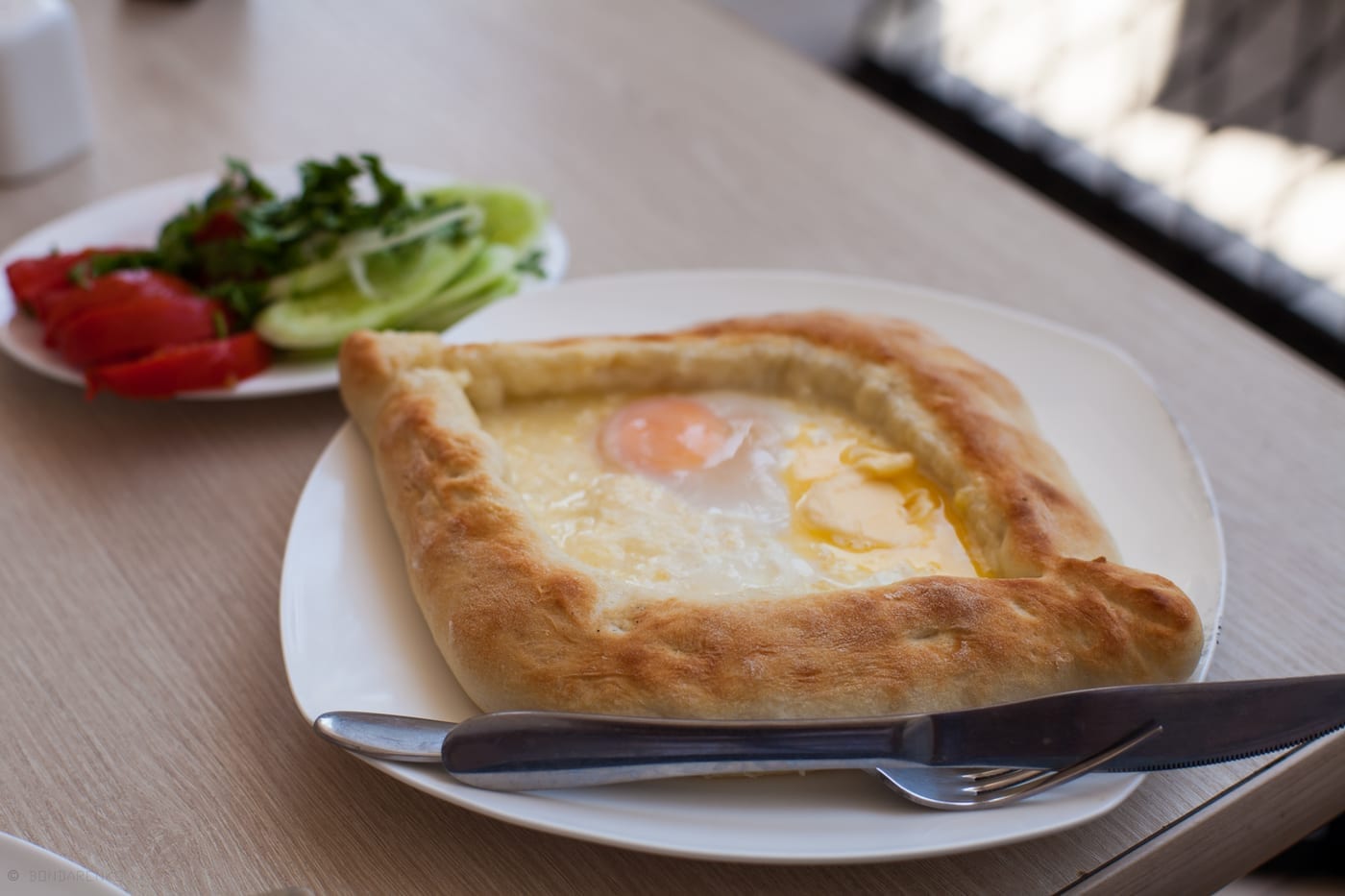
Adjarian khachapuri — known locally as ach'aruli — is the open, boat-shaped bread that has become one of Georgia's most recognisable dishes abroad. Along Batumi's Black Sea coast and across Adjara's mountain villages, it is less a novelty than everyday comfort food: dough pulled into an oval, walls folded to hold a pool of melted cheese, then finished with butter and a raw egg yolk at the table.
Khachapuri in general means "cheese bread" in Georgian, and every region has its own shape. Imeretian rounds, Mingrelian pies with cheese inside and on top, and penovani layers each tell a local story. The Adjarian version is distinct because it is served open, like a small vessel, and eaten hot while the cheese is still bubbling.
Where the boat comes from
Food historians trace khachapuri to ancient Georgian bread-and-cheese traditions, but the Adjarian boat took its modern form in western Georgia's humid subtropical lowlands, where dairy farming has long been central to village life. Adjara's pastures supply the salty, elastic cheeses — often a mix of sulguni and local curds — that give the filling its stretch and depth.
A popular local explanation links the shape to Black Sea fishing boats: the dough hull represents the craft that once carried Adjara's coastal communities, the golden yolk the sun above the water, and the melted cheese the sea itself. Scholars treat that account as folklore rather than documented history, yet it captures how closely the dish is tied to Batumi's maritime identity.
By the twentieth century, ach'aruli khachapuri was standard fare in Adjarian homes and small bakeries. As Batumi grew into a resort city, restaurants along the boulevard and in the old town added it to menus for visitors as well as residents. Today it appears everywhere from modest cafés to hotel terraces — often the first Georgian dish newcomers try after landing on the coast.
What makes it different
Unlike closed khachapuri baked as a flat disc, the Adjarian form is shaped by hand, proofed, then baked until the rim is crisp and the centre holds molten cheese. Just before serving, a knob of butter and a raw egg yolk are dropped into the hot centre; diners stir them in with a fork, folding torn pieces of the crust into the mixture.
The result is rich and communal — one boat typically feeds one or two people and is meant to be eaten immediately. In Batumi, lunch crowds and evening diners alike order it as a shared starter or a light meal with a salad and tarragon lemonade.
Quick recipe: Adjarian khachapuri at home
This simplified home version follows the classic boat shape and cheese filling. Allow about two hours including rising time.
Ingredients
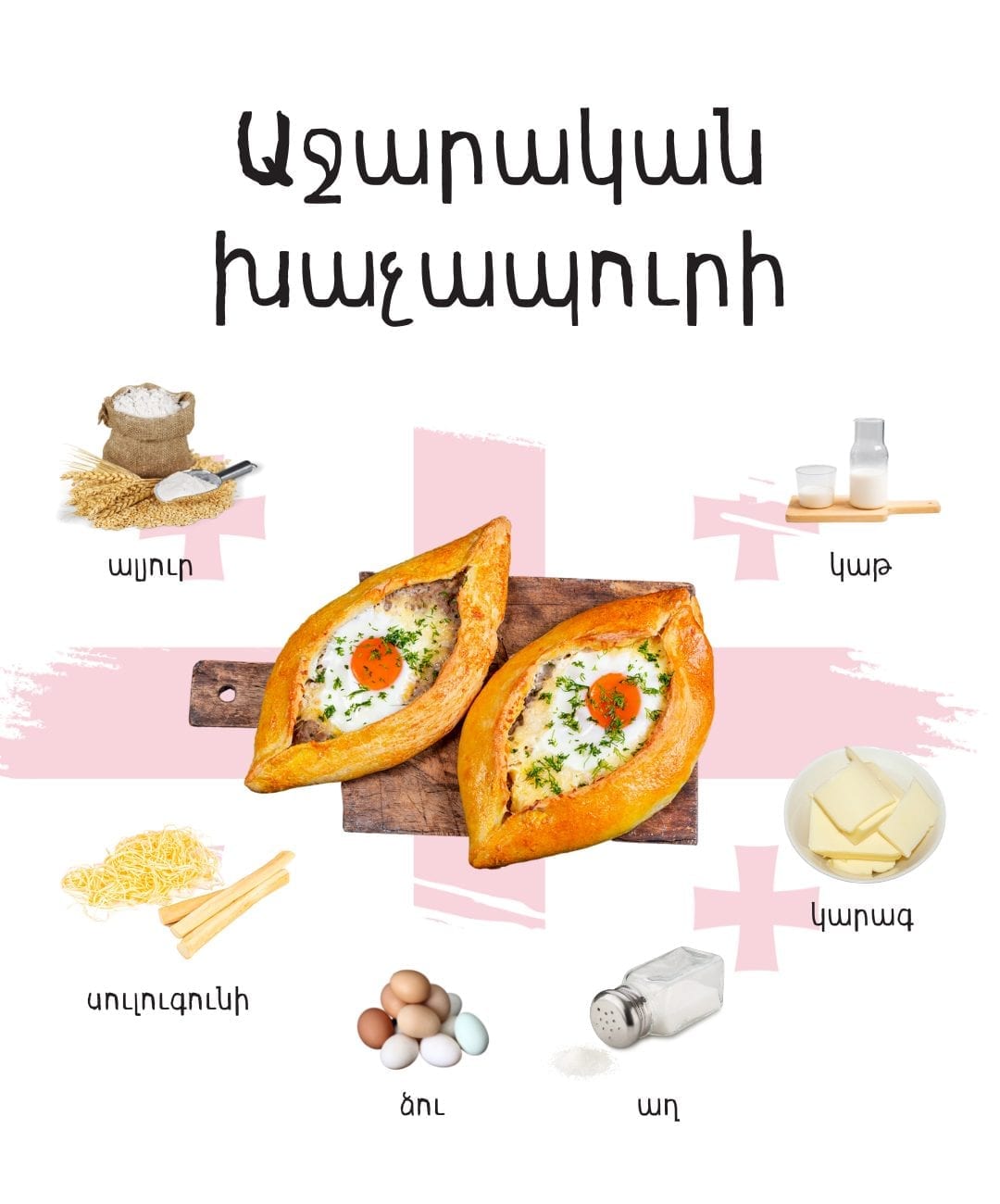
- 500 g plain flour, plus extra for dusting
- 300 ml warm water
- 7 g instant yeast
- 1 tsp sugar
- 1 tsp salt
- 2 tbsp olive oil
- 400 g mixed cheese — sulguni and mozzarella work well, grated or torn
- 2 tbsp butter
- 2 egg yolks (one optional for the dough; one per boat when serving)
- Pinch of salt for the filling
Method
- Dough: Dissolve yeast and sugar in warm water. Mix flour and salt, add yeast water and oil, knead 8–10 minutes until smooth. Cover and rise 1 hour until doubled.
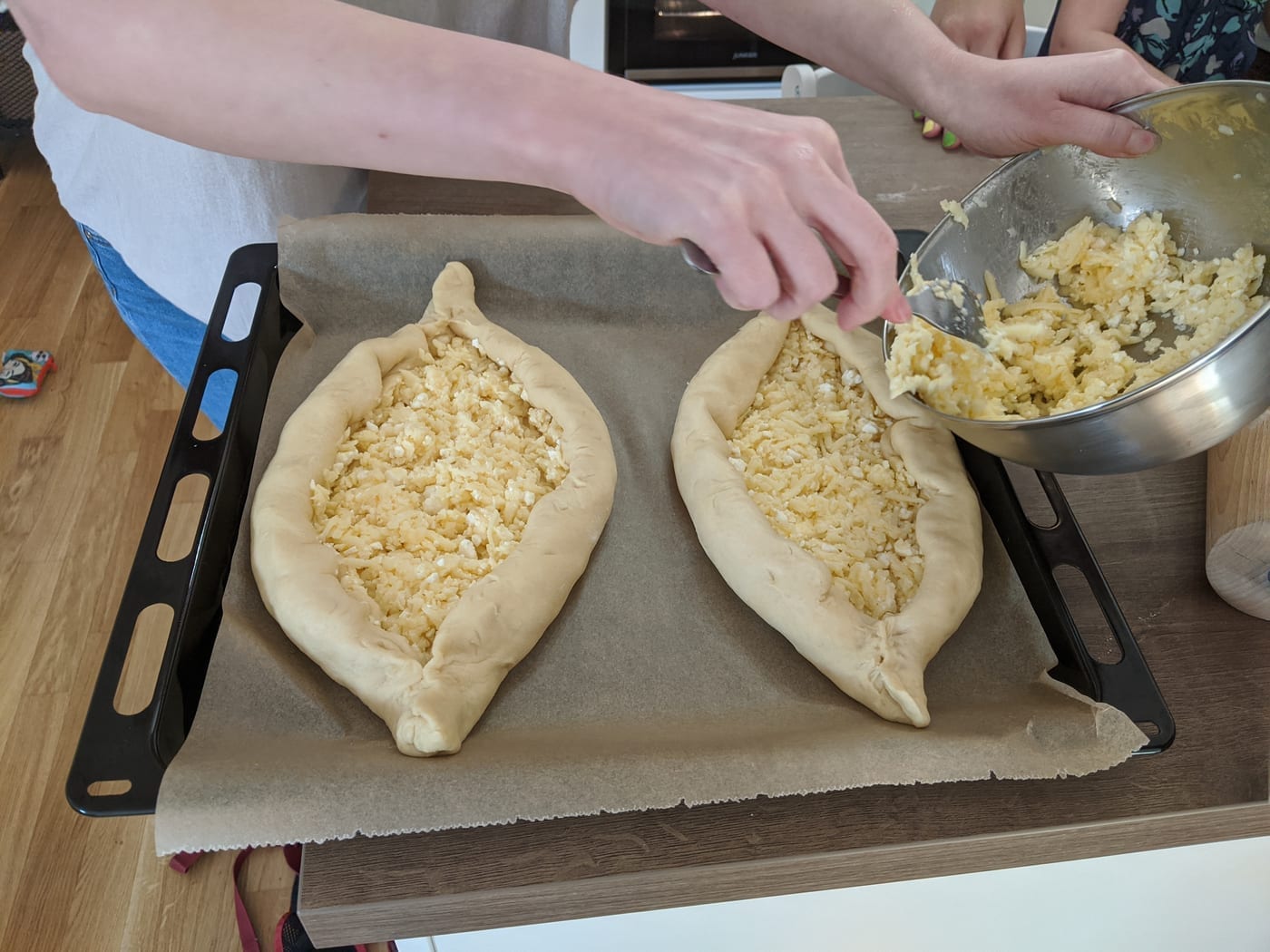
- Shape: Divide into two portions. Roll each into an oval about 25 cm long. Fold the long sides inward to form a boat with raised edges, pinching the ends to create pointed tips.
- Fill: Scatter cheese along the centre channel, leaving the rim clear. Rest 15 minutes while the oven heats to 220 degrees Celsius.
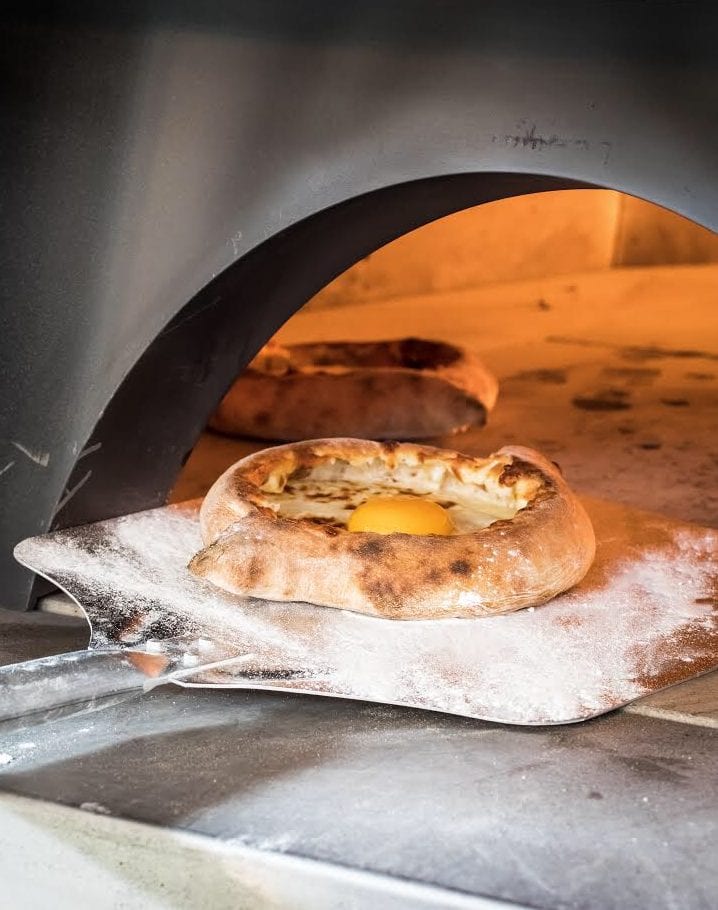
- Bake: Bake on a lined tray 15–18 minutes until the crust is golden and the cheese has melted.
- Finish: Add a small piece of butter and one raw egg yolk to each hot boat. Stir at the table and tear the crust into the cheese to eat.
For a closer match to Batumi bakery style, use a very hot oven and a cheese blend that includes a salty Georgian or brined variety if available locally.