A Tbilisi court sentenced seven people to five years in prison on June 19 over unrest linked to the October 4, 2025 municipal elections, including 72-year-old pediatrician Giorgi Chakhunashvili.
The convicted are Giorgi Chakhunashvili, Davit Zhghenti, Konstantine Kokaia, Kakhaber Mzhavanadze, Zakro Albutashvili, Davit Sturua, and Ia Darakhvelidze. Six were found guilty of participating in group violence and attempting to seize a strategically important facility. Darakhvelidze, a creative director and musician, was convicted only of group violence.
Verdict and custody
Two of the seven had been free on bail before the ruling. Chakhunashvili, a pediatrician, was taken into custody in the courtroom after the verdict was read. Supporters had cited his age and medical background during earlier hearings. Darakhvelidze, who had been released earlier because of epilepsy, is reported to be abroad and is expected to be declared wanted.
Judge Giorgi Gelashvili initially said Darakhvelidze had received a three-year term, but court officials later described that as a mistake and confirmed her sentence is also five years.
How the case fits the wider October 4 docket
The June 19 verdicts follow an earlier round in May, when ten people — including rally organizers and protesters — received prison sentences. With the latest group, 17 defendants have now been convicted in connection with the events.
Separately, prosecutors have reached plea agreements with two groups totaling 22 people who admitted the charges and were released. The seven defendants sentenced on June 19 did not admit guilt. Prosecutors had offered plea deals in other cases that allowed defendants to avoid lengthy prison terms after acknowledging the charges.
Up to 60 people have been charged overall. Most were held in pretrial detention, including former United National Movement-era Defence Minister Bacho Akhalaia, who was later arrested on accusations of helping to lead the unrest.
What happened on October 4
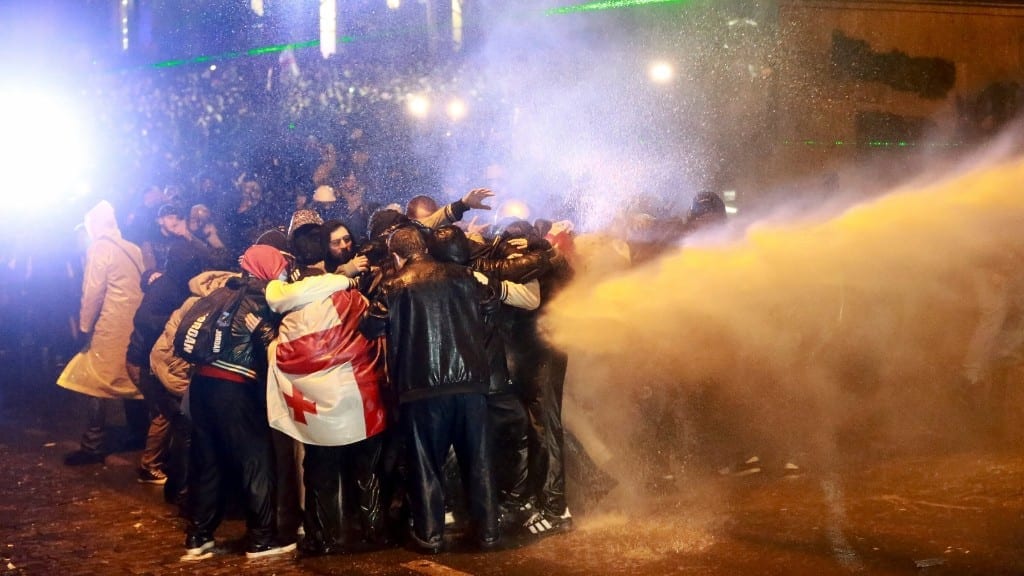
Unrest erupted in central Tbilisi on October 4, 2025, the day of partially boycotted municipal elections. Opposition groups and civil-society figures had urged a boycott after months of political tension, and large crowds gathered in the capital as polls closed. After a rally that organizers described as promoting a "peaceful revolution," a group of protesters attempted to enter the presidential palace in downtown Tbilisi. Police used force, including water cannons, to repel the crowd.
Georgian Dream officials have described the events as a foreign-backed coup attempt. Some government critics have questioned whether the confrontation was partly facilitated by the authorities, citing claims that sections of the palace railings had been left loosely secured. Those allegations have not been resolved in court as part of these proceedings.
What comes next
Further trials and sentencing hearings are expected as prosecutors continue to work through the remaining charges. Darakhvelidze's reported absence abroad may lead to an international wanted notice if she does not return to face enforcement of the sentence.
The October 4 cases remain among the most closely watched legal proceedings in Georgia, linking election-day politics, street protest, and the government's response to a direct challenge at a central state building in the capital.