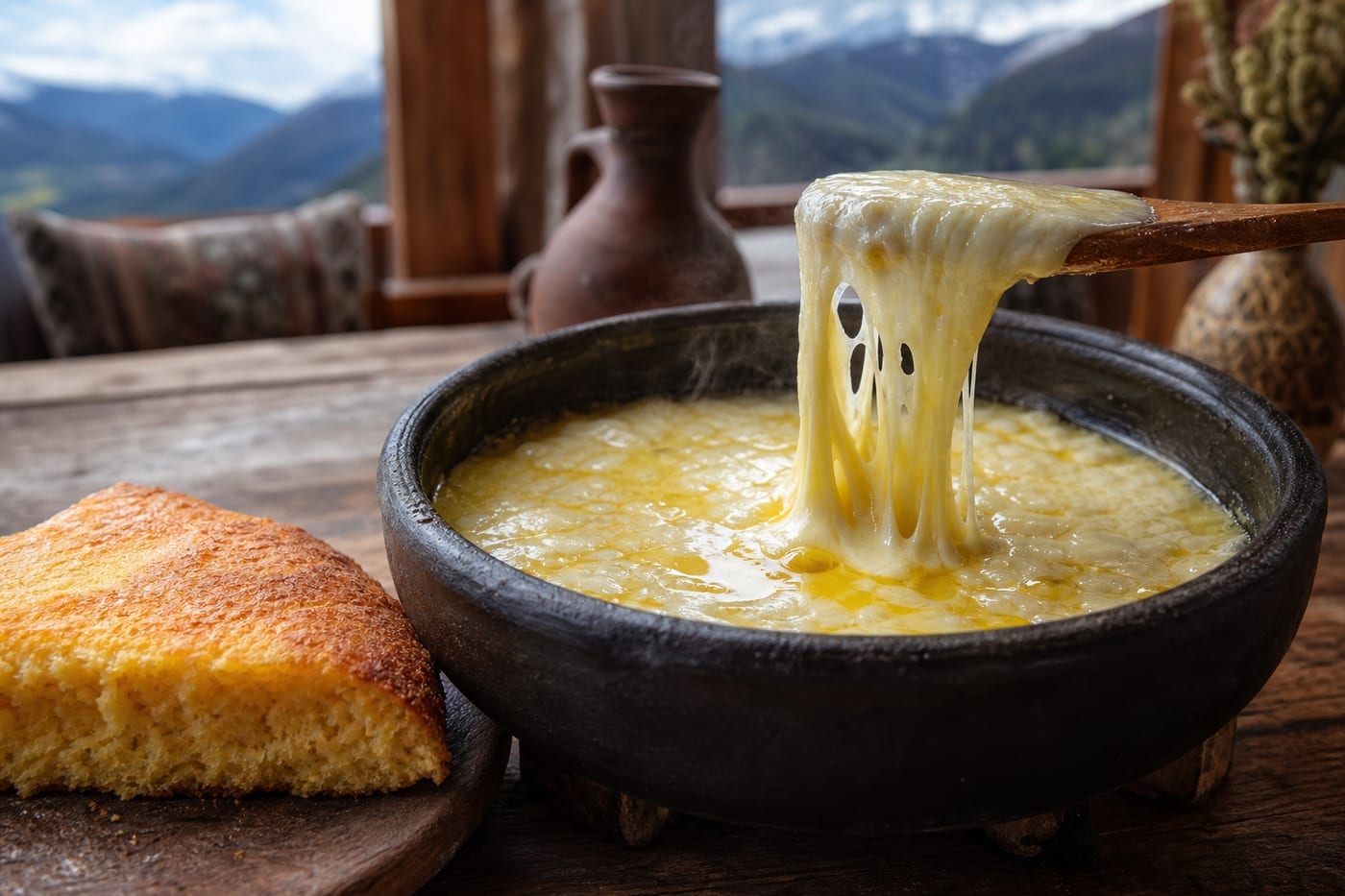
While Adjarian khachapuri claims national and international fame, another indulgent dairy creation reigns supreme in the highlands of southwestern Georgia. Borano is a traditional high-alpine pasture dish from Adjara, combining rich cheese and melted butter into a bubbling, velvety delight. Simple in its ingredients yet profound in flavor, this comfort dish offers a direct taste of Adjara's mountain heritage and centuries-old pastoral traditions.
For visitors exploring Batumi or venturing inland toward Khulo and Shuakhevi, Borano represents a distinct side of Georgian cuisine. Served steaming hot in traditional clay dishes, it showcases how rural cooks transformed basic dairy staples into an extraordinary feast for cold mountain evenings.
A Mountain Tradition Born in High Pastures
Borano originates in the high-altitude villages of Upper Adjara, where livestock grazing and dairy production have sustained communities for generations. In the alpine meadows, shepherd families relied on energy-dense meals to endure long working days and chilly mountain weather. Cheese and butter were abundant, leading to recipes designed to maximize both flavor and warmth.

The heart of traditional Borano lies in two essential ingredients: local Adjarian cheese and sizzling clarified butter, known locally as erbo. Traditionally, cooks used a salted, stringy cheese made from cow or sheep milk, often aged in wooden tubs. When combined with hot clarified butter, the cheese melts into elastic, golden threads that coat the palate with rich savory notes.
In recognition of its deep historical roots and cultural importance, Georgia officially granted Borano the status of Intangible Cultural Heritage in 2018. The designation highlights not only the dish itself, but also the preservation of traditional pastoral culinary techniques across Adjara's mountain districts.
Regional Variations and Cooking Methods
Although the foundation of Borano is always cheese and butter, local families and mountain villages prepare the dish in a few distinct ways depending on the occasion and available ingredients.
The classic version, known simply as cheese Borano, focuses entirely on dairy purity. Slices or shredded strips of cheese are placed in a preheated clay pan called a ketsi. Clarified butter is heated in a separate skillet until bubbling and golden, then poured directly over the cheese. The intense heat softens the cheese without scorching it, creating a silky pool of melted dairy.
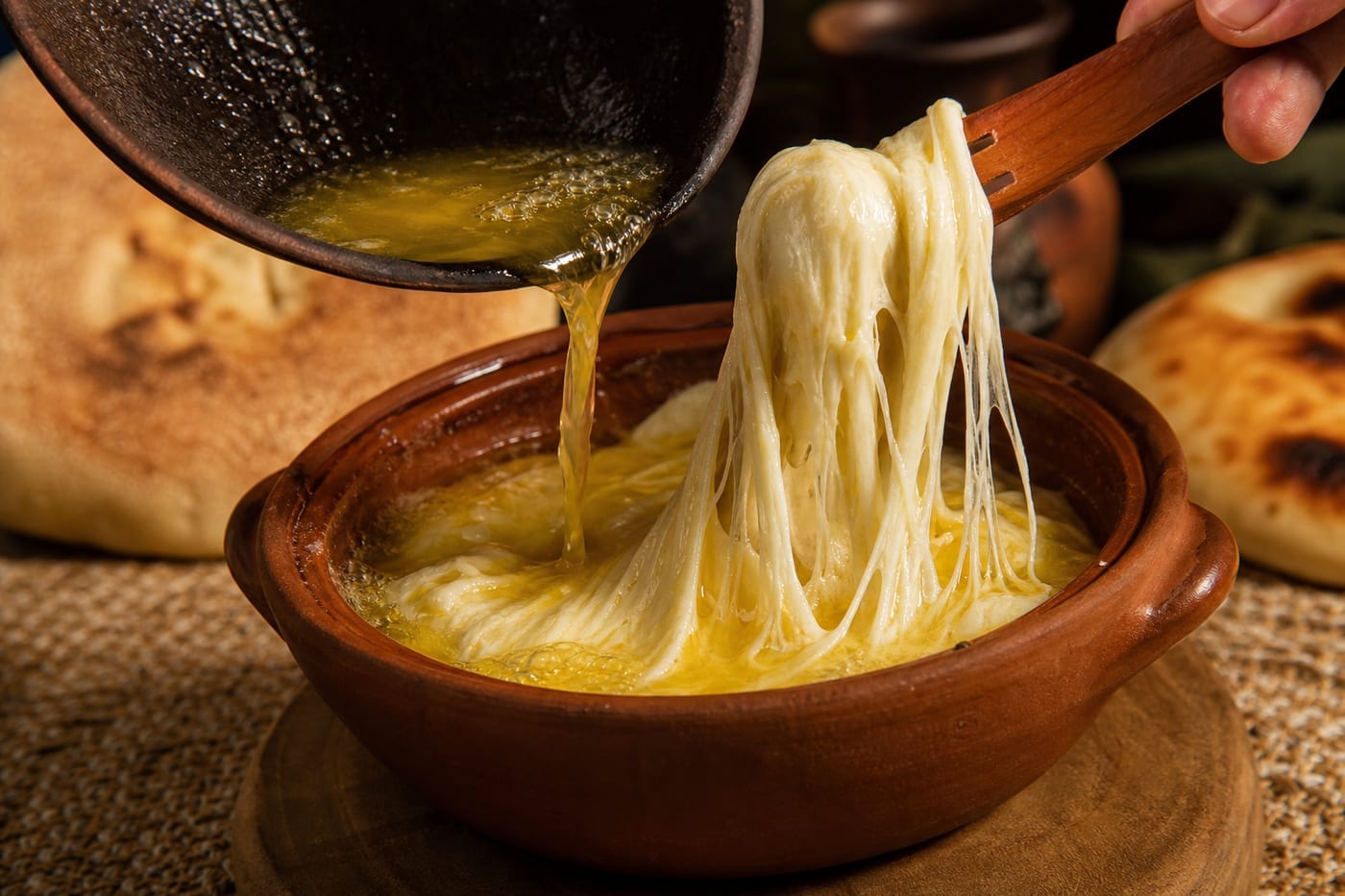
A second popular variation incorporates eggs or a sprinkle of coarse cornmeal into the cheese mixture before adding hot butter. This style yields a slightly firmer, custard-like texture akin to a rich cheesy soufflé or pan-fried omelette. In some mountain households, boiled water or whey is briefly mixed with the cheese to soften its saltiness before the hot butter is applied.
Regardless of the specific technique, timing is critical. Borano must be served immediately while the butter is actively bubbling and the cheese retains its elastic stretch.
How to Serve and Enjoy Borano
In traditional Adjarian hospitality, Borano is never eaten in isolation. It occupies a central place on the supra table during family gatherings and regional celebrations, often surrounded by fresh herbs, pickled peppers, and crisp cucumbers.
The classic accompaniment to Borano is hot golden cornbread, known in Georgia as mchadi. The dense, crunchy crust and tender crumb of mchadi provide the perfect vehicle for scooping up the melted cheese and seasoned butter. Alternatively, fresh shoti bread or warm flatbread can be torn and dipped directly into the dish.
To balance the richness of the cheese and butter, locals pair Borano with light, crisp beverages. A glass of chilled dry white wine from Adjara or neighboring Imereti works exceptionally well, as does traditional Georgian tarragon lemonade or hot herbal tea brewed from mountain herbs.
Recipe: Authentic Adjarian Borano at Home
You can recreate this highland classic in your own kitchen with a few quality ingredients. If traditional Adjarian cheese is unavailable, a combination of fresh Sulguni and low-moisture mozzarella or mild feta provides an authentic texture and flavor profile.
Ingredients
- 300 g Sulguni cheese (or a 50/50 mix of mozzarella and low-salt halloumi or brined cheese), sliced or shredded
- 100 g high-quality unsalted butter or clarified butter (erbo)
- 2 tbsp cornmeal or fine wheat flour (optional, for egg/flour variation)
- 2 large eggs (optional, for egg-style Borano)
- Pinch of salt (if using un-salted cheese)
- Fresh mchadi or crusty white bread for serving
Method
- Prepare the cheese: Slice or shred the cheese into uniform pieces. If using very salty brined cheese, soak the pieces in warm water for 10 minutes, then drain and pat dry.
- Heat the pan: Preheat a heavy cast-iron skillet or clay ketsi over medium-low heat. Place the prepared cheese evenly across the bottom of the pan.
- Clarify the butter: In a separate small saucepan, melt the butter over medium heat. Allow it to simmer gently until the foam subsides and the liquid turns a light golden color with a nutty aroma.
- Combine: Pour the sizzling hot melted butter evenly over the cheese in the preheated pan. If making the egg variation, whisk eggs with flour and pour over cheese prior to adding the hot butter.
- Melt and set: Allow the dish to sit on low heat for 2 to 3 minutes until the cheese is completely soft, glossy, and stringy. Do not stir vigorously; let the cheese naturally melt into the butter.
- Serve immediately: Remove from heat and bring the pan directly to the table while bubbling. Serve hot with warm mchadi or crusty bread for dipping.