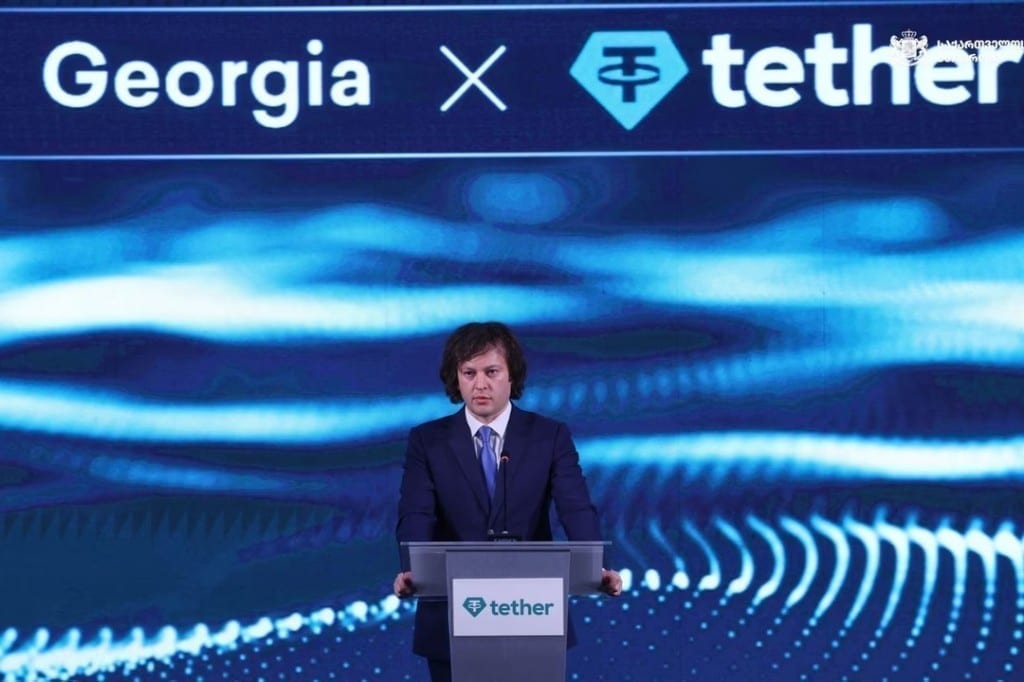
The world's largest stablecoin issuer Tether has launched operations in Georgia and announced a digital lari called GELt, pegged one-to-one to the national currency.
On 25 May, Prime Minister Irakli Kobakhidze said the partnership would provide a major boost to the economy and bring further investment into education and social programmes. Georgia's National Bank said it welcomes the development.
What Tether announced
Tether is best known for USDT, a dollar-linked stablecoin widely used in crypto trading and cross-border transfers. The company said its Georgia office will work with local institutions on blockchain-based payment tools. GELt is described as a lari-denominated token intended to mirror the value of one GEL rather than replace banknotes overnight.
Officials linked the project to Georgia's broader push to attract fintech firms and experiment with digital finance. Details on rollout timing, licensed partners and consumer access are expected in later announcements.
Why regulators and markets are watching
Stablecoins sit between traditional banking and crypto markets. For the National Bank, welcoming a major issuer while keeping oversight is a balancing act: innovation can bring investment and technical jobs, but token use also raises questions about supervision, anti-money-laundering rules and how deposits stay protected.
For residents and expats, GELt may eventually offer another way to move or hold lari-denominated value online, especially where crypto rails are already familiar. Day-to-day shopping and salaries still run through banks and cash; any token would need clear rules before it becomes a routine payment option.
Analysts note that similar announcements elsewhere have moved slowly from press conferences to live products. Georgia has promoted itself as open to digital business, but implementation will depend on how quickly banks, exchanges and regulators align on standards.
The May announcement marks a visible step in that direction. Further clarity on legal status, taxation and consumer protections will shape whether GELt remains a niche crypto instrument or a wider part of Georgia's payment landscape.