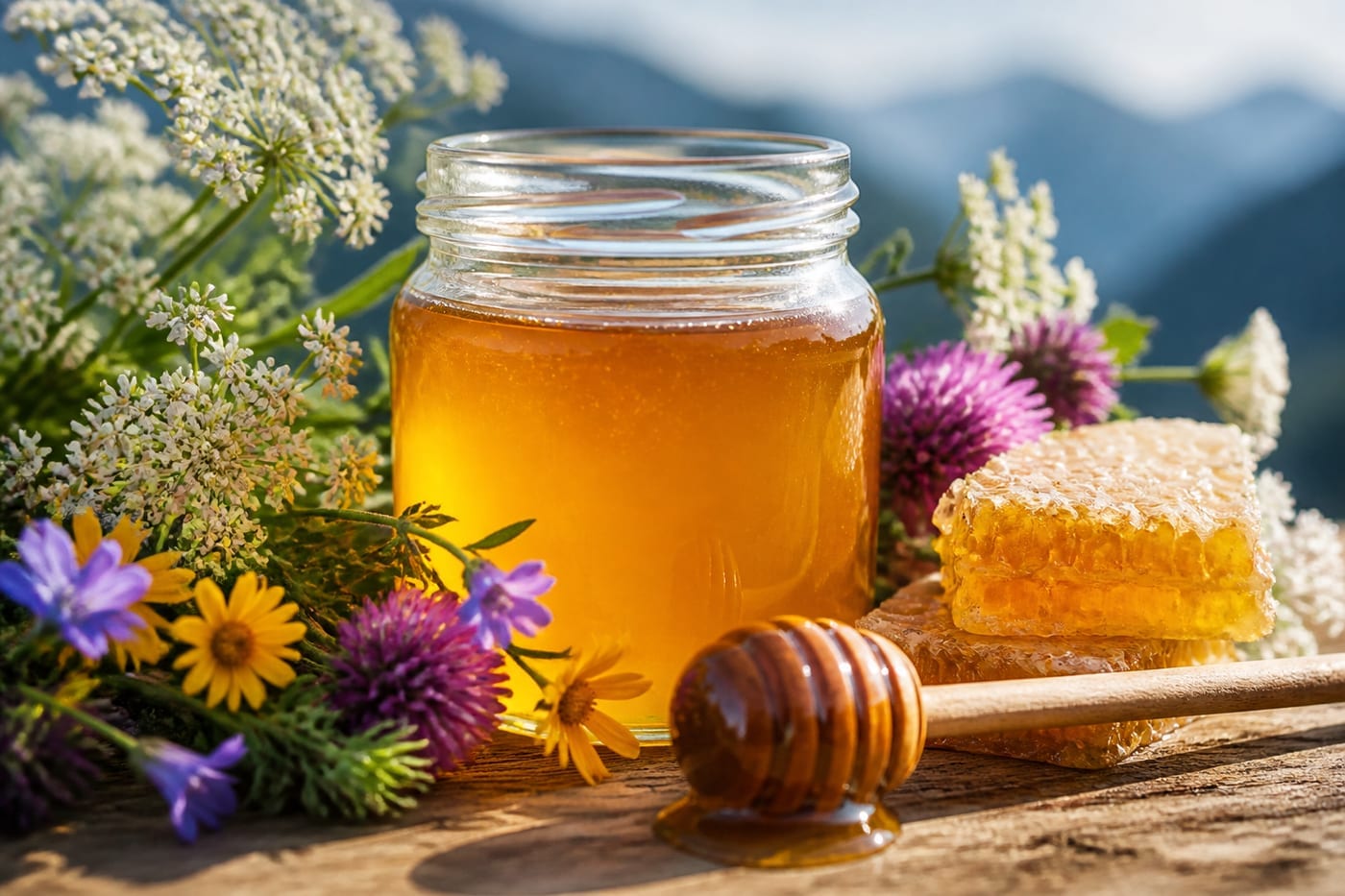
The southwestern autonomous republic of Adjara, stretching from the Black Sea coastline to the high alpine ranges of the Lesser Caucasus, possesses one of Georgia's most diverse ecological landscapes. This geographical variation creates exceptional conditions for apiculture. From lowland subtropical citrus groves and acacia blossoms to dense mountain chestnut forests and alpine meadows exceeding 2,000 meters in elevation, Adjara produces a wide variety of distinct monofloral and polyfloral honeys recognized for their purity and rich aromatic profiles.
Beekeeping in Georgia carries a deep historical heritage, with archaeological findings pointing to apicultural practices dating back thousands of years. Central to this tradition is the native Caucasian Grey mountain bee (Apis mellifera caucasia), famous among entomologists and beekeepers worldwide. Known for its docility, exceptional cold tolerance, and an unusually long tongue reaching up to 7.2 millimeters, the Caucasian Grey bee is uniquely equipped to extract nectar from deep tubular blossoms in dense mountain forests and steep alpine terrain where other honeybee species struggle.
Microclimates and Floral Diversity
The marked elevation changes across Adjara allow local beekeepers to practice transhumance—moving apiaries seasonally from lowland valleys to high-altitude pastures. In early spring, hives are typically situated near coastal areas and lower river valleys where acacia, citrus trees, and fruit orchards bloom first. As seasonal temperatures rise, beekeepers transport their hives upward into mid-altitude deciduous zones dominated by sweet chestnut (Castanea sativa) and Caucasian linden (Tilia begoniifolia).
Among Adjara's most celebrated varieties is mountain chestnut honey, harvested primarily in mid-altitude forests during June and July. Chestnut honey from Adjara is characterized by its dark amber hue, viscous consistency, and a distinctive bittersweet taste accompanied by a subtle woody aroma. Scientific characterizations of Adjarian chestnut honey highlight its high concentration of natural minerals, pollen diversity, and elevated levels of total phenols and flavonoids, which contribute to strong antioxidant and antibacterial properties.
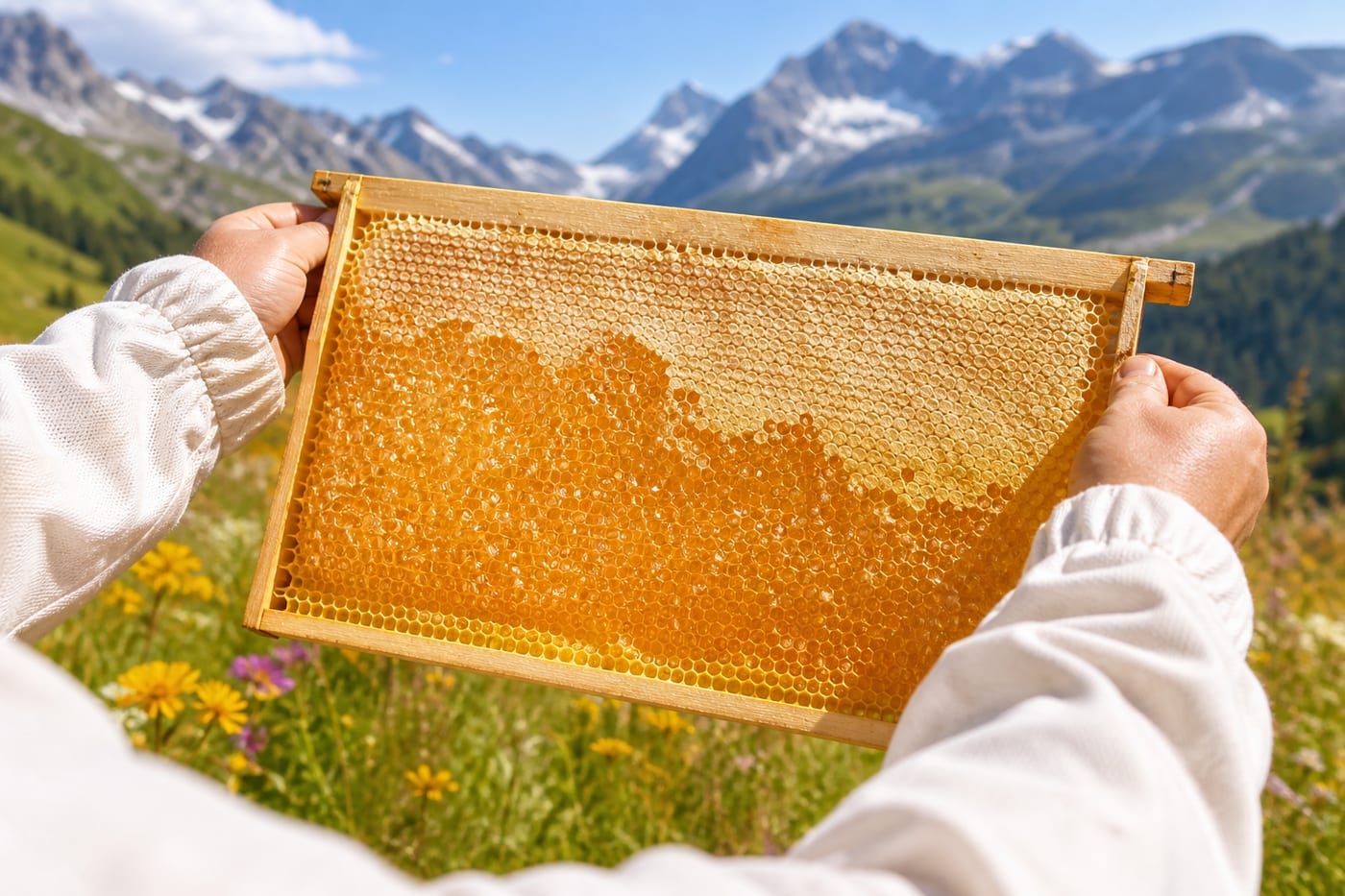
Further up the mountain slopes, between 1,700 and 2,500 meters above sea level, lies the alpine and sub-alpine floral zone. Here, bees forage on hundreds of wild mountain herbs and endemic flora, including alpine rhododendrons, clover, wild thyme, and masterwort. Alpine polyfloral honey from Upper Adjara is prized for its golden-yellow color, delicate floral fragrance, and well-balanced sweetness, reflecting the pristine, unpolluted environment of high mountain pastures far from industrial or agricultural chemical exposure.
Ancient Jara Log Hives and Wild Honey Heritage
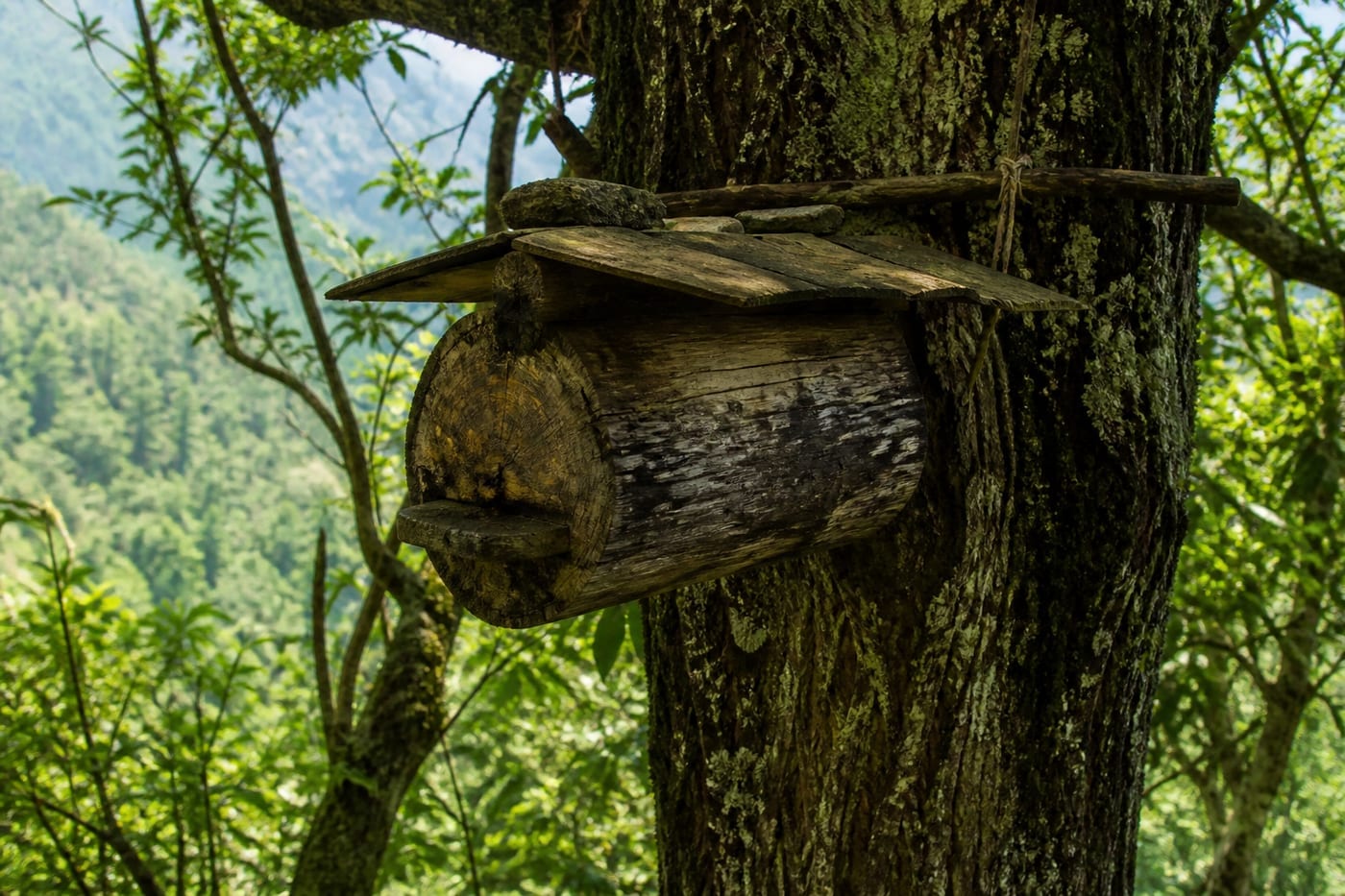
In the remote villages of Upper Adjara—particularly within the highland municipalities of Khulo, Shuakhevi, and Keda—beekeepers preserve one of the world's rarest traditional apicultural methods: Jara beekeeping. Unlike modern wooden hives with artificial wax foundation sheets, a jara is a cylindrical hive carved from a hollowed-out tree trunk, most commonly linden, chestnut, or spruce.
Beekeepers place these heavy log hives high in forest trees or along sheltered cliff ledges to protect the colonies from natural predators and harsh mountain weather. The bees build their honeycombs entirely naturally without human interference, artificial comb foundations, synthetic chemicals, or antibiotic treatments. The colony develops undisturbed throughout the spring and summer, and Jara honey is collected only once a year in early autumn.
Because Jara hives remain undisturbed in deep forest environments, the resulting wild honeycomb honey is noted for its exceptional purity, dark resinous notes, and complex floral depth. In recent years, international development projects and local agricultural associations have supported Jara beekeepers in securing organic certification and protecting the tradition, establishing the Goderdzi Alpine Garden and regional cooperatives to ensure sustainable production and heritage conservation.
Gastronomic Significance and Quality Standards
Honey holds an essential place in Adjara's culinary traditions and regional economy. In Batumi and regional agro-markets, local honeys are staple products sought after by both residents and international visitors. Regional cuisine frequently pairs dark chestnut or alpine honey with local cheeses, fresh walnuts, and traditional baked goods such as sinori or cornmeal cakes.
To safeguard regional quality, Georgian agricultural authorities and research institutions monitor honey purity through physicochemical testing, verifying parameters such as moisture content, diastase activity, and pollen origin. Strict standards prohibit antibiotic residues and synthetic additives, ensuring that honey exported from or sold within Adjara meets both national and European Union import requirements.
As interest in sustainable agriculture, natural products, and food origin grows globally, Adjara's centuries-old beekeeping traditions continue to gain international recognition. Through the combination of unique mountain ecosystems, native bee genetics, and time-honored practices like Jara log hives, Adjara's honey sector remains a cornerstone of western Georgia's agricultural and culinary landscape.